Ductile Iron Valve Nodularity: Simple Guide | JINGDA VALVE
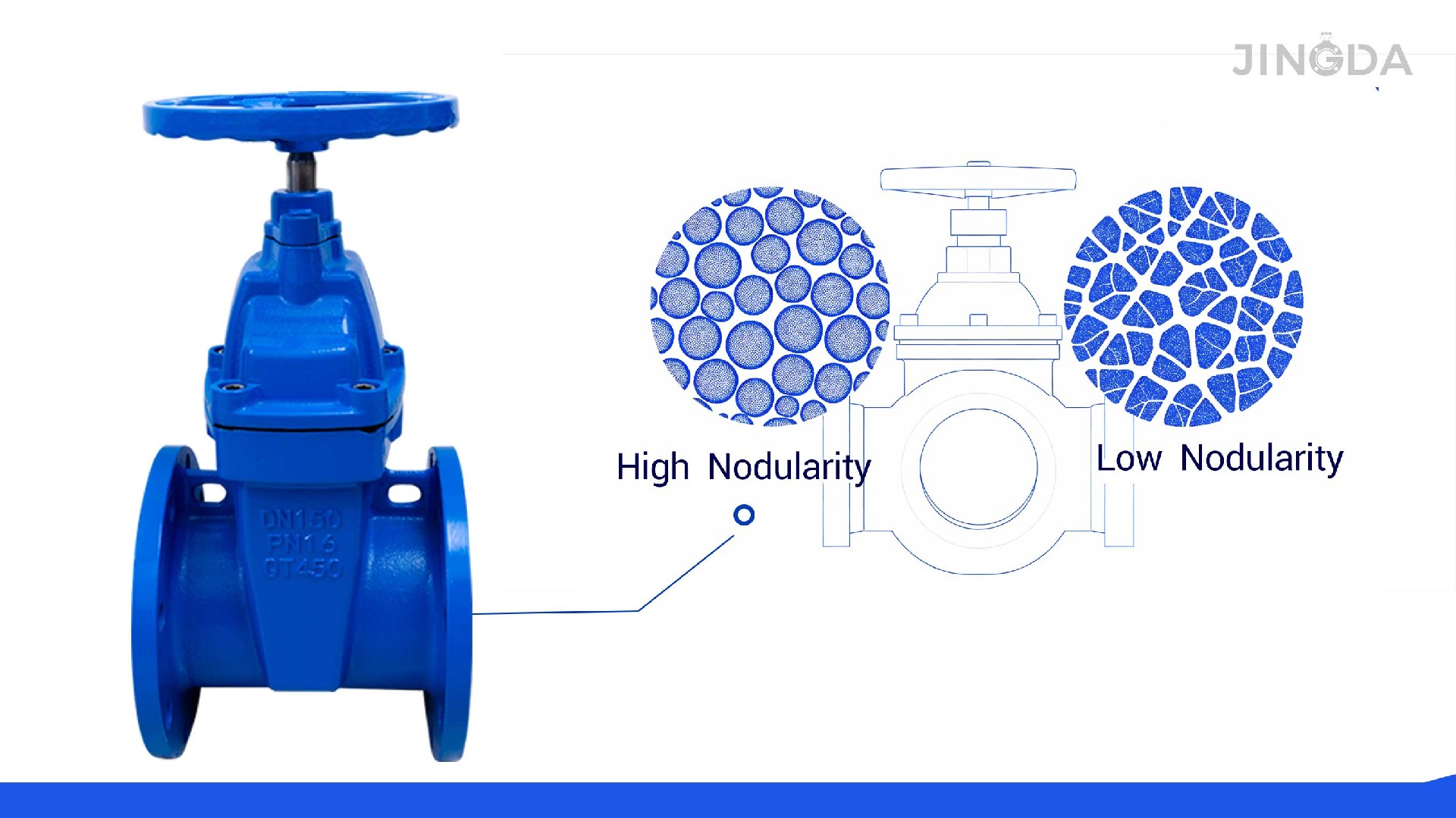
Ductile iron is widely used for valves. Nodularity is a key factor that decides how good a ductile iron valve is. It’s easy to understand—here’s what you need to know, from JINGDA VALVE.
1. What is Nodularity?
Nodularity tells you how much graphite in ductile iron is spherical (round). Raw ductile iron (gray iron) has flake graphite, which makes it easy to break. We add special materials to turn flake graphite into round graphite. The higher the nodularity, the better the valve works.
2. How Nodularity Affects Valves
① Strong and Durable
High nodularity makes valves strong and tough, so they won’t crack easily. Low nodularity makes valves brittle and easy to break. JINGDA VALVE controls production carefully to ensure good nodularity.
② Good Sealing, No Leakage
High nodularity makes the valve material dense, so it seals well and resists pressure. Poor nodularity causes leakage.
③ Long Service Life
Valves with high nodularity last longer, resist wear and corrosion, and need less maintenance. JINGDA VALVE tests every valve to make sure it’s reliable.
3. Basic Industry Nodularity Requirements
• Ordinary valves (PN10/16): ≥80% nodularity
• Medium-high pressure valves (Class 150/300): ≥85%~90% nodularity
• High-end valves: ≥90% nodularity
4. JINGDA VALVE: High Nodularity as Standard
JINGDA VALVE doesn’t just meet industry standards—we pursue stable, high nodularity in every valve. We control every production step, from raw materials to testing, to ensure our ductile iron valves are reliable and long-lasting.
Summary
Nodularity is key for ductile iron valves—it affects strength, sealing and service life. Choose JINGDA VALVE for high nodularity, stable performance and peace of mind. Contact us for more details.
Email: admin@jingda-valve.com
WhatsApp: 008615831765099